
汤余铭 简介
汤余铭,出生于北雁荡山脉下,为感恩故乡,取画名北雁山人,现居北京,专业画家。著名居士画家和书法家,世界文化遗产艺术艺术研究会会长和中国佛教书画院高级院士。自1973年起创作一大批家喻户晓的宣传画、年画由浙江人民美术出版社、西冷印社出版全国发行。90年代转入研究世界文化遗产艺术,创作出独具一格、中西结合的三维效果石窟、佛像大作。在国内外及港澳台等地先后二十次展出,《人民日报》、《环球人物》杂志、《世界遗产》杂志等国家刊物多次发表专刊,《中华书画家》、《荣宝斋》等出版专辑画册全国发行。作品在保利、翰海、香港拍卖,拍出字画款项多数捐出做慈善活动。现为世界文化遗产艺术研究会会长。汤余铭自言:"五十多年艺术生涯,最有意义是,为保护、传承、弘扬世界文化遗产主题而作画的过程。"
Tang Yu Ming
Introduction to Tang Yu Ming: Tang Yu Ming, known as "Bei yan shanren," is a layman painter, the President of the World Cultural Heritage Art Research Association, and one of the specially appointed painters of the Xinhua Calligraphy and Painting Institute. For over two decades, he has traveled to various Buddhist sacred sites in China, exploring large Buddhist grottoes. Through deep exploration of the art of painting, he pioneered the creation of three-dimensional ink Buddha statues that blend Eastern and Western styles. Bei yan shanren hopes to promote world cultural heritage through his art.
If humanity loses its memory, the world will become a desolate place.” In 1992, UNESCO called for global attention to the protection of world cultural heritage. At that time, a Chinese artist was racing against time. With just a chair, a pen, and a piece of paper, he could depict vast landscapes. He aimed to preserve the roots of Chinese world cultural heritage with his brush.
There is a category of artists in this world who do not simply paint for the eyes of the audience but focus more on communicating through the heart and cultural depth. Tang Yu Ming is one such artist. From his youth, he painted subjects related to the Red Revolution in Chinese society. He then spent twelve years in seclusion at Wutai Mountain, studying Buddhist culture, before dedicating his lifetime to exploring world cultural heritage. The entire process consumed 46 years of Tang Yu Ming’s life. As an artist, he spent over 40 years studying the profound cultural meanings behind his work. I now increasingly feel that the protection of world cultural heritage is not only material but also spiritual and memory-related. While material things can be restored, once the spirit and culture are lost, it is permanent destruction.
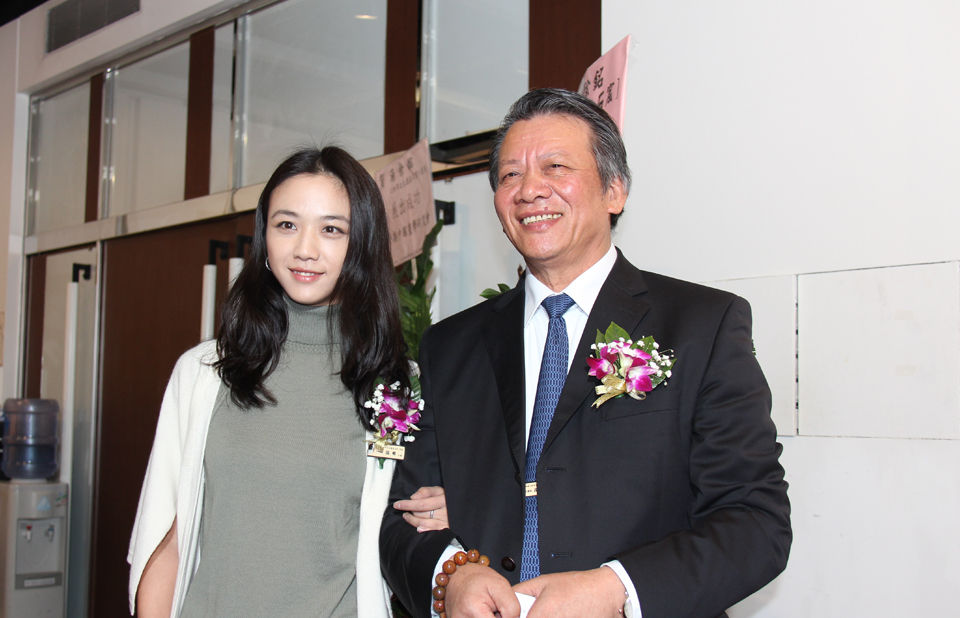
On November 6, 2014, at Taiwan’s Chiang Kai-shek Memorial Hall, Tang Youming’s “World Cultural Heritage Painting Exhibition” opened. This was a high point following exhibitions in Hong Kong and Macao. Cultural luminaries from around the world specially attended, with some writing in amazement, “These are the most beautiful artworks I’ve seen in recent years!” His daughter, Tang Wei, also came to support her father, carefully grinding ink for him. In Tang Wei’s heart, her father’s dedication to art had already deeply influenced her.
In the 1970s, he created numerous well-known prints, New Year’s paintings, and artworks related to the Red Revolution, such as “Defending the Motherland,” “Celebrating the 24th Anniversary of the People’s Republic of China,” and “Struggling for Our Ideals.”
Today, some people are willing to pay over a million yuan to find his original manuscripts.


After accumulating ten years of Western painting techniques, in the 1980s, Tang Youming began studying Chinese ink painting. He visited major ancient grottoes with thousands of years of history all across China, spending two years at the Yungang Grottoes alone. He explored the four major Buddhist holy sites from Wutai Mountain to Putuo Mountain and the Chan Buddhism of Central China to the Tantra and Mahayana Buddhism of Tibet and Nepal. Countless Buddha statues and murals made Tang Youming feel like he had traveled through time. Eventually, he decided to live in seclusion at Wutai Mountain for 12 years, exploring the method of using ink on rice paper to depict three-dimensional effects that combined Eastern and Western elements, capturing the texture, volume, and spatial aspects of the grottoes, creating a three-dimensional spatial effect. Over the past two decades, he has produced multiple series of works based on world cultural heritage research, earning him the title of "the foremost artist in the world cultural heritage art of painting" by both domestic and international media.
Seeing so many splendid and precious world cultural heritage sites being destroyed, Tang Youming was deeply saddened. "Many Buddha statues have serene expressions and graceful postures, but due to severe natural erosion, they have already lost their original appearance." "Precious yet fragile is the characteristic of every world cultural heritage site. I believe it is the duty of an artist to preserve the beauty of the Chinese nation. It is also a calling card for our Chinese dream!" Tang Youming said. As of 2014, China had 47 locations listed on the World Heritage list, ranking second in the world. "Our cultural status in the world is of great significance, and I hope that through my own work, I can call on more social groups and enterprises to pay attention to the protection of world cultural heritage. Chinese cultural heritage embodies the unique spiritual values, ways of thinking, and imagination of the Chinese nation, reflecting the vitality and creativity of the Chinese people. It belongs to our ancestors, us, and our descendants! I will dedicate my lifetime to participating in the research of world cultural heritage.